The Kardashian Effect
I wrote this paper for my psychology class at Harvard that explored the hidden psychological functions behind aesthetics. It looks at why the Kardashian aesthetic (big curves, tiny waist, full lips), still dominates our culture, even though so many of us know it's unrealistic. For most of my life I internalized extreme beauty standards(whether it was the Kardashian curves or skinny model aesthetic) without even realizing it. I used to be deeply emotional about my body—constantly comparing, adjusting, trying to measure up. But writing this from an academic lens allowed me to step back and really study the psychology behind it. To see the inner workings of the machine. And that made me feel more empowered than I expected, because now I can look at it for what it is, not what it made me believe about myself.
As you read, notice what feelings come up. Where have you internalized unrealistic standards, and where are you ready to let them go?
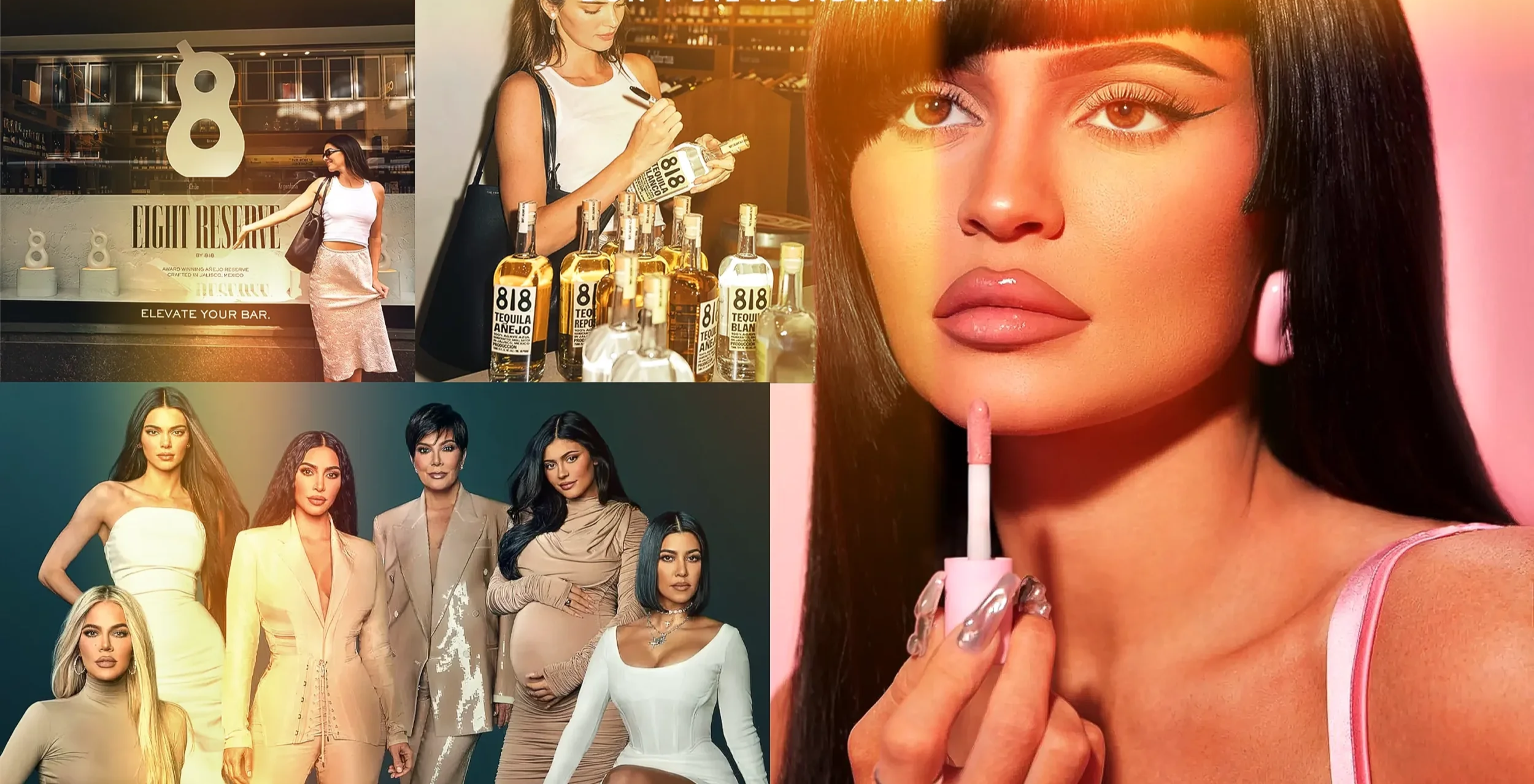
“You know how they look even if you've never watched an episode of their show or seen their Instagram feeds. You've seen their aesthetic details replicated on innumerable faces around the world” (Allure Magazine, 2022). This is the power of the “Kardashian Effect.” Over the past decade, the “Kardashian Effect” aesthetic has dominated Western beauty standards and become a global phenomena. Popularized by Kim Kardashian, Kylie Jenner, and other members of their family, this aesthetic is defined by a combination of exaggerated features: large breasts, large butt, tiny waist, flat stomach, and full lips. The Kardashians have turned this look into a brand, building multi-million-dollar businesses around it: Skims (shapewear), Kylie Cosmetics (lip kits and makeup), and Good American (jeans for curvier bodies). Additionally, Instagram models, influencers, reality TV personalities, and young women all over the world have replicated this aesthetic, helping it become one of the most dominant beauty ideals of our time. And the numbers reflect it: according to the American Society of Plastic Surgeons (2018), butt lift procedures (uncoincidentally) increased by 256 percent between 2000 and 2018. It is hard to ignore how deeply this specific look has shaped what is considered beautiful in the West.
Personally, I do not find this aesthetic beautiful. While it contrasts with the ultra-thin, underweight model body type that has also significantly influenced mainstream beauty ideals, the Kardashian aesthetic is the opposite extreme. I have had breast augmentation myself, and have always appreciated my naturally full lips, so I can understand the appeal of enhancement. However, when it comes to these extreme, exaggerated curves, the disproportionate bust-to-waist-to-hip ratios, and the enlarged facial features, I find this aesthetic excessive, unnatural, and cartoonish. On a deeper level, I’ve also felt the psychological effects of trying to exist between conflicting beauty standards. I was never thin enough to fit the super-skinny model ideal, and definitely not curvy or busty enough to match the Kardashian body type. Over time, as I’ve stepped back from social media and reduced my exposure to celebrity culture, I’ve started to see this aesthetic for what it really is: manufactured, commodified, and unrealistic. While many people still aspire to it, I believe it warps our sense of what’s actually beautiful, rather than enhancing it.
The fact that this aesthetic continues to dominate Western culture raises an important question: Why do people find this beautiful? To explore this, I focus on ultimate explanations for why others find the Kardashian Effect appealing by looking at biological, neurological, and cultural evolutionary frameworks. These frameworks offer tools to help us understand why the Kardashian-eque features have become popular in the first place, even when they’re extreme, unattainable, or emotionally harmful. By looking at the Kardashian Effect through these ultimate explanations, this paper aims to uncover the deeper functions behind one of the most polarizing beauty ideals of our time.
One ultimate explanation for the widespread popularity of the Kardashian aesthetic can be explained through a biological lens. Research shows that attractiveness in the female body is strongly influenced by waist-to-hip ratio (WHR), which can often be associated with health and fertility. Singh et al. (2010) found that a WHR of approximately 0.7 is consistently rated as most attractive across cultures. Interestingly, even among women with this preferred ratio, thinner women were rated as more attractive than heavier women with the same WHR (Singh et al., 2010). This is especially relevant when considering the Kardashian body type. Even as their aesthetic has shifted from the fuller, curvier look of the 2010s, to a noticeably slimmer frame today (sparking conversations around their use of Ozempic and the likes), their hips and busts remain disproportionately large. The aesthetic has simply evolved into an even more refined and nuanced version: thin face, thin limbs, yet still large breasts and curves. It’s still all about the exaggerated 0.7 ratio, just with less visible body fat.
Singh et al. (2010) also highlight the role of facial features in perceived attractiveness, which can explain the plumped lips in particular that help define the signature Kardashian look. Across cultures, men tend to prefer neotenous (youthful) facial traits in women, such as large eyes, full lips, and small noses, all of which are linked to reproductive potential. Unsurprisingly, the Kardashian aesthetic reflects these traits, with surgically enhanced lips, lifted eyes, and narrow noses that are often further exaggerated through makeup, injectables, and filters.
This kind of feature exaggeration can be understood through Ramachandran and Hirstein’s (1999) peak shift principle, which shows how our brains respond even more strongly to amplified versions of things we already find appealing. The Kardashian aesthetic of tiny waists, big hips and butts, and full lips exemplifies this perfectly; bodies that look like this are super-stimuli in their own right. It’s also a great example of what Pinker (1999) calls the “cheesecake/spillover effect”: when something takes an evolved preference (like signs of fertility or youth) and enhances it so much that it becomes even more desirable than the real thing. The features we’ve always been wired to notice get exaggerated to the point where they feel irresistible.
Another ultimate explanation for why this look has become so dominant and admired by so many has to do with a simultaneous shift in Western culture, a shift that the Kardashians arguably helped create themselves. In Kardashians: A Critical Anthology, Jones, Burton, and Brien (2024) trace the rise of Kim Kardashian, her body, and the broader aesthetic shift she represents. “During the early aughts era – known for its bone-thin, bleached-blonde beauty standards – curvaceous, dark-featured Kim Kardashian could be seen hovering at the edges of her best friend Paris Hilton’s paparazzi shots, laying the groundwork for future discourse about their ethnic ambiguity and influence on body image in women.” As the Kardashians gained visibility, so did their look. And as their brand became more polished and strategic, so did their bodies. It’s a feedback loop: fame fuels the aesthetic, and the aesthetic fuels the business. Jones, Burton, and Brien (2024) put it perfectly: “This would come to be a defining cycle for the family: a body-focused social media or TV show narrative, which provokes public outrage, which promotes brand visibility, which the family then adapts into a branded product.” The Kardashians maintain control over the beauty narrative while monetizing it at every opportunity that they can get. As referenced in the article, Not Even the Kardashians Can Keep Up With Their Unrealistic Beauty Standards (TIME Magazine, 2023) “Just when the world starts to catch up to one version of the Kardashian look, they shift it again – new body, new face, new product line.”
This is just the tip of the iceberg. When diving deeper into their cultural influence and looking at the Kardashian Effect from a cultural evolutionary lens, there is a lot more to unpack here. Firstly, we can see how it operates as a kind of costly signal. The Kardashian aesthetic is expensive to maintain, and therefore signals access to resources. The extreme body modifications, coupled with designer clothes, elite trainers, and full-glam lifestyle all communicate wealth, status, and access. The body itself then becomes a luxury item.
Why are so many women copying this look? One explanation can be success-biased imitation: the idea that we tend to copy people who appear successful. The Kardashians are wildly wealthy and famous, and they seem to have it all: access, status, influence. So it makes sense that people would want to replicate their fashion, makeup, and bodies.
For women who imitate this look, it becomes a costly signal for them that they too can afford plastic surgery, injectables, and everything else that comes with the Kardashian ecosystem. What’s also interesting is that it can also be seen as identity signaling. By adopting the Kardashian look, women may not just be trying to attract men, they’re also aligning themselves with a particular social group. (Just take a look at nearly every professional male athlete’s girlfriend or wife in the U.S., and I will bet money that they’ll look like a Kardashian). In many ways, the aesthetic has become shorthand for a certain kind of lifestyle: wealth, desirability, luxury, influence. Following this look communicates that you know the codes, and want to be seen as part of that world.
However, for the Kardashians themselves, as high-status individuals (or “high types”), they can afford to hide the effort behind their enhancements. The women who imitate their look, on the other hand, often fall into the “medium type” category: they send the same signals (lip filler, BBLs, filters) but without the cultural capital to bury them. And for those like me, who don’t imitate this look at all? Technically, we’re the “low types.” But I’d argue that my ability to bypass the effort entirely and rely (mostly) on my natural beauty becomes a status symbol in itself. But, enough about me – back to the Kardashians.
As previously touched on, the Kardashians take signaling one step further through what Hoffman and Yoeli (2022) call buried signaling. They explain that making a positive trait less obvious can actually make the signal even stronger and suggests confidence that people will recognize it on their own. The Kardashians are masters of this. They’ve never fully admitted to surgery (at least not the full extent of it) and instead credit their bodies to things like “good genes,” healthy habits, or clever makeup. They make it seem effortless and attainable, even when in reality it requires extreme effort, capital, and access.
And then, yes, you guessed it, it goes yet another step further.
This dynamic is echoed in The New York Times’s profile, How ‘Keeping Up With the Kardashians’ Changed Everything, which describes their refusal to admit to plastic surgery as both “ludicrous and shrewd.” The article notes that the Kardashians have “sold the appearance of extreme, even campy body modification as an accessible consumer experience.” They have essentially turned buried signaling into a business model. While the Kardashians may not be able to exactly sell plastic surgeries themselves, they can (and do) sell the things that supposedly achieve the look: lip kits, waist trainers, shapewear.
At first glance, the Kardashian Effect might seem like a passing trend or media hype, but there’s so much more going on beneath the surface. Ultimately, the Kardashian aesthetic has become one of the most dominant beauty ideals of our time not just because it’s trendy, but because it taps into ancient biological preferences and powerful cultural forces. It’s exaggerated, commodified, and, at times, deeply unrealistic. But on an ultimate level, that’s exactly what makes it so effective. There’s a whole system underneath that’s deeply rooted in signaling, identity, and, of course, capitalism. As someone who’s spent years navigating these conflicting standards, I now see the Kardashian Effect not just as a beauty ideal, but as a mirror reflecting the deeper forces that shape our culture, our desires, and the way we see ourselves. The hardest, yet most important thing I’ve done is stop trying to compete with that system. To step away from the noise, tune back into myself, and start defining beauty on my own terms. Easier said than done, I know. It’s taken me 15 years and counting. But the further I get from the illusion of the Kardashian Effect, the more I remember what’s real, and truly important in life.
Savanna Stevens is a model, writer, and wellness entrepreneur currently pursuing her Master’s in Psychology at Harvard University. She lives between Manhattan, NY and Sydney, Australia and has worked with brands including Nike, Google, Covergirl, Lululemon, and Glamour. To subscribe to Soul Sessions with Savanna, click here. To learn more about Savanna and to inquire about speaking, partnerships, or consulting, visit: savannastevens.com